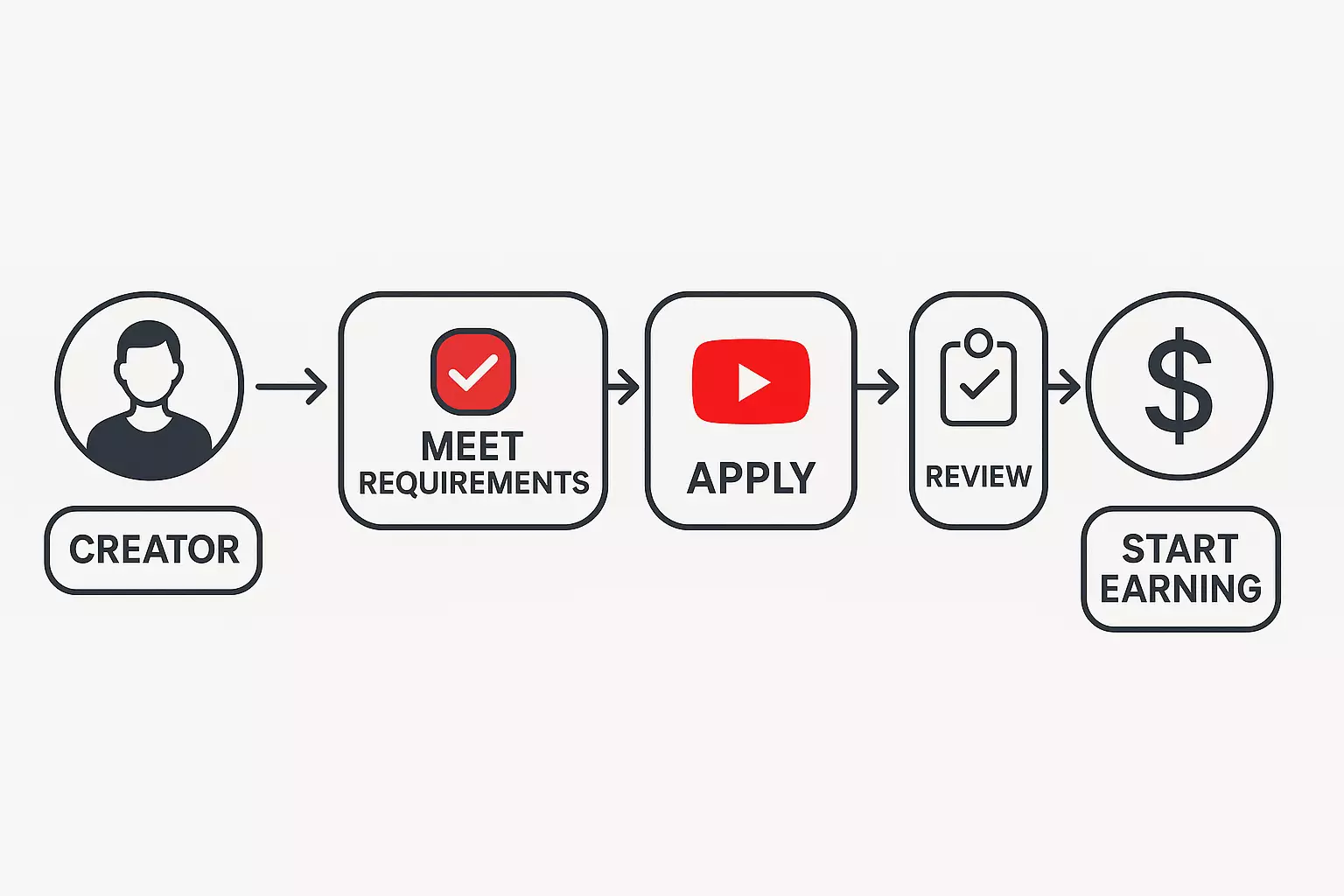
How to make money on YouTube without chasing every option
A sustainable YouTube business connects three things: a specific audience need, content that earns attention and trust, and an offer or platform feature that creates measurable value. Subscriber count matters for some YouTube features, but it does not tell you which revenue model fits your channel.
This Guide separates two decisions creators often combine. First, determine which YouTube Partner Program features your channel can qualify for. Second, choose one business model—sponsorships, affiliates, services, products, memberships or merchandise—that matches the audience’s real intent and your ability to deliver.
Who this Guide is for
- You are approaching YPP eligibility and want to understand what each threshold actually unlocks.
- You have views or returning viewers but ad revenue is small or inconsistent.
- You want income beyond ads without turning every video into a promotion.
- You already have several revenue ideas and need a way to choose what to test first.
Choose the route that matches the channel
| Your strongest evidence | Revenue model to investigate | First question |
|---|---|---|
| Qualified public watch time or Shorts views | YouTube Partner Program | Which eligibility level and modules apply in your country? |
| Viewers compare tools or products | Affiliate recommendations | Can you help with the decision without compromising trust? |
| A specific audience valuable to relevant brands | Sponsorships | Can you define fit, deliverables, usage rights and measurement? |
| A valuable problem you can solve directly | Service or coaching | Can you promise a narrow outcome and deliver it reliably? |
| The same problem appears repeatedly | Digital product | Will people make a real commitment before you build it? |
| People return for ongoing access or community | Membership | Can you sustain a concrete recurring benefit? |
| A strong identity or product-specific demand | Physical product or merchandise | Do margins survive production, shipping, returns and support? |
The three-part learning path
- Understand and apply for YPP. Learn the difference between the expanded 500-subscriber level and the higher ad-revenue threshold, what activity counts, and how YouTube reviews the whole channel.
- Choose and validate revenue beyond ads. Compare six models using problem fit, purchase intent, credibility, operating cost and concentration risk.
- Measure the content evidence. Use Analytics to understand discovery, viewer behavior and returning audience patterns; combine that evidence with sales, costs and delivery time.
A stage-based monetization plan
Stage 1: learn before you build
Collect repeated audience questions and identify where viewers already make a decision. If there is no evidence of a useful problem, your next job is better content and audience research—not a store, course or membership.
Stage 2: run one small paid test
Choose one model and one offer. Define the audience, promise, delivery work, disclosure and success criteria before publishing. A test should produce evidence even if it makes little revenue: who responded, what they expected, what it cost to deliver and whether the video still served viewers.
Stage 3: make the model repeatable
Document the workflow, improve the offer and measure profit and creator time rather than gross revenue alone. Only then add a second model to reduce dependence on one sponsor, platform feature or launch.
What to measure each month
- Audience evidence: relevant views, retention, returning viewers and the questions people ask.
- Business evidence: qualified inquiries, conversions, revenue, direct costs, fees and refunds.
- Operating cost: production, sales, support and fulfillment time.
- Trust: viewer response to sponsor or sales content and whether recommendations remain useful without a purchase.
- Risk: the percentage of revenue controlled by one sponsor, product or platform.
Use the Content System Guide to make delivery repeatable. Monetization should support the content engine, not consume all the time needed to create the next useful video.
Disclosure is part of the content
If you have a financial, employment, personal or product relationship that could affect an endorsement, disclose it clearly. For U.S.-facing content, review the current FTC influencer disclosure guidance. YouTube also provides a paid-promotion setting and platform guidance for sponsorships and endorsements. Rules vary by country and situation; this Guide is not legal advice.
Frequently asked questions
Do I need YPP before I can earn money?
No. Direct sponsorships, affiliate programs, services and external products can operate outside YPP, subject to the terms and laws that apply. YPP is required for YouTube’s own revenue-sharing and selected platform features.
Which revenue model should a small channel start with?
Start with the model requiring the least unsupported assumption. A small expert channel may validate a service; high-intent tutorials may support relevant affiliate recommendations; a membership usually needs evidence that viewers return for ongoing value.
Should I diversify immediately?
No. Test one primary model, understand its demand and operating cost, and make it manageable. Add another source after the first has evidence. Launching many unvalidated offers at once creates complexity, not resilience.
Is gross revenue a useful success metric?
Not by itself. Subtract direct costs, fees, refunds and the time required to sell and deliver. Also consider whether monetized content helped or harmed audience trust and future production.